They Will Survive
In the old town of Tayma, an oasis on the ancient Incense Route, properties are enclosed by chest-high mud walls. Freshly washed rugs are hanging over some of them to dry, woven by Bedouin women from sheep’s wool, goat and camel hair in strong colours and with geometric patterns. It is a world that does not give the impression of hurrying anywhere.
Less than two hundred kilometres to the south-east, this impression begins to fade. In AlUla, between bizarre sandstone formations and the testimonies of a long history, Saudi Arabia presents itself as astonishingly contemporary. Here a future is being tested at considerable expense, and for the moment it looks as if many believe it might work. One encounters the optimism in cafés, hotels, galleries and above all in conversations with young Saudis, among them many women, who exude a remarkable self-assurance.
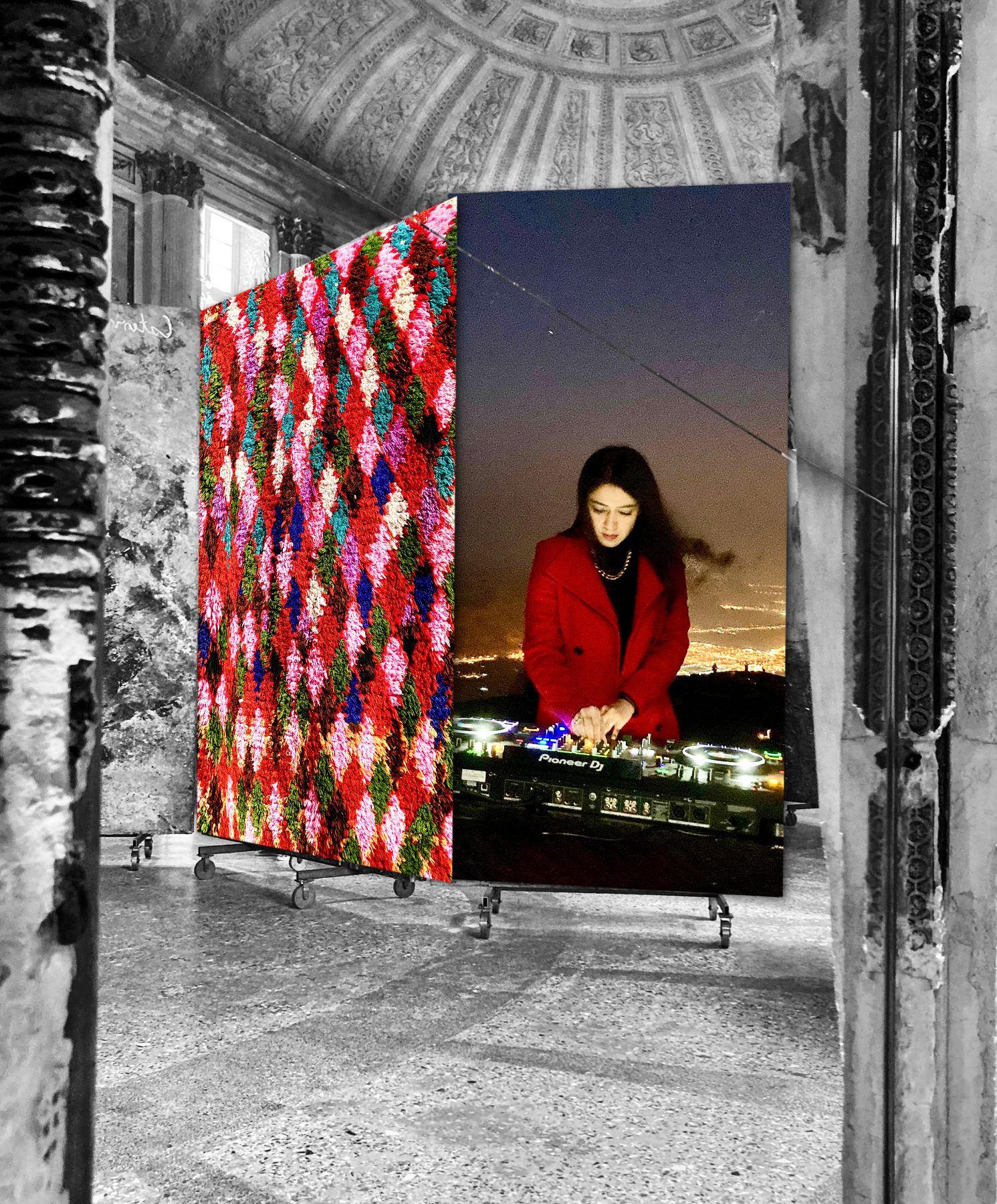
On weekends, many of them drive up onto the Harrat, a table mountain a good 1,200 metres high. The flock to the Okto, an open-air bar with a view of the old town of AlUla and the Ashar valley. Dusk is already falling when a dense rhythm suddenly interrupts the conversations. A little below the terrace, a Saudi DJane works her decks. She wears a long red coat; her black hair falls loose over her shoulders. The speakers blast out Gloria Gaynor's “I Will Survive”, a song that in the West has long carried a certain story with it. Here, on this mountain in Saudi Arabia, one wonders whether it might not have yet another to tell.
© 2026 Michael Hannwacker www.juxtapositions.de